For appointments: +91 96716 00470 | +91 86195 19149
Monday - Saturday: 9:00am - 8:00pm
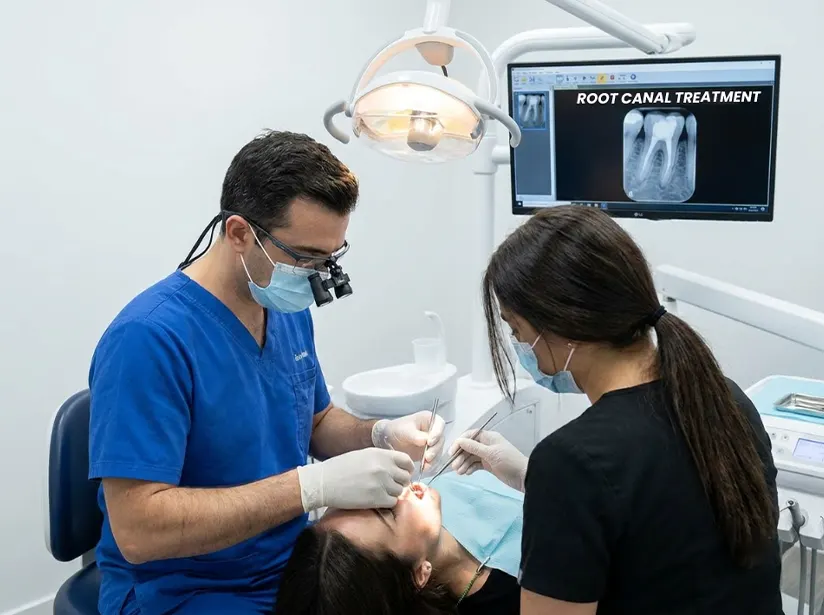
A persistent toothache can make eating, sleeping and everyday activities uncomfortable. Sometimes, the pain comes from a cavity or another dental problem that affects the soft tissue inside the tooth, known as the dental pulp. When this tissue becomes severely inflamed or infected, root canal treatment may be recommended to help save the natural tooth.
At Dr. Gourav Dental Art in Karnal, Haryana, patients can seek an assessment for tooth pain, deep decay, dental injuries and other problems that may require root canal treatment. The appropriate treatment depends on the condition of the tooth, the extent of the damage and the findings of a dental examination.
Root canal treatment, also called endodontic treatment, involves removing inflamed or infected pulp, cleaning and disinfecting the inside of the tooth, and sealing the root canals. The tooth is then restored as needed to help it function and withstand normal biting forces.
If you have persistent tooth pain, sensitivity that lingers after hot or cold food and drinks, or swelling around a tooth, do not ignore the symptoms. Arrange a dental assessment to understand the cause and discuss suitable treatment options.
Looking for root canal treatment in Karnal? Contact Dr. Gourav Dental Art to arrange a consultation and learn whether root canal treatment may be appropriate for your tooth.
Root canal treatment is a dental procedure used to treat problems affecting the pulp inside a tooth. The pulp contains nerves, blood vessels and connective tissue. It helps the tooth develop, but inflammation or infection can occur when bacteria reach it through deep decay, a crack, a dental injury or certain complications involving previous dental treatment.
During a root canal procedure, the dentist accesses the inside of the tooth, removes the affected pulp, cleans and disinfects the root canal system, and seals the space with appropriate filling material.
The tooth is then restored with a suitable filling, crown or other restoration, depending on how much healthy tooth structure remains.
The main purpose is to address the problem inside the tooth while preserving the natural tooth whenever it can be predictably restored.
A root canal is not the same as removing a tooth. Extraction removes the entire tooth, whereas root canal treatment aims to retain the tooth's outer structure and root.
Not every toothache requires root canal treatment. Dental pain can have several causes, including cavities, gum problems, cracks and sensitivity. A dentist must examine the tooth and consider the symptoms before recommending treatment.
Possible signs of pulp inflammation or infection include the following.
Pain that continues, returns repeatedly or interferes with eating and sleeping may indicate a dental problem that needs prompt attention.
The pain may feel sharp, dull, throbbing or difficult to locate. Its intensity alone does not determine whether a root canal is necessary.
A tooth may react to hot or cold food and drinks when its pulp is irritated. If the discomfort continues after the temperature stimulus has been removed, the tooth should be assessed.
However, sensitivity can also result from exposed dentine, gum recession, enamel wear and other conditions. An examination is needed to identify the cause.
Discomfort when biting down may be associated with inflammation around a tooth's root, a crack, a high filling or another dental problem.
Avoid repeatedly testing a painful tooth by biting hard foods. Arrange a dental examination to determine what is causing the discomfort.
Swollen gums, tenderness near a tooth or swelling around the face can occur with a dental infection. A small pimple-like swelling on the gum may also indicate an underlying problem.
Facial swelling, fever or difficulty opening the mouth requires prompt professional assessment. If you have difficulty breathing or swallowing, seek emergency medical care immediately.
A tooth that becomes darker after an injury may have experienced damage to its pulp. Discolouration alone does not confirm that root canal treatment is needed, but it should be evaluated by a dentist.
A large cavity, a crack or a dental injury may allow bacteria to reach the pulp. In some cases, the pulp becomes inflamed or infected even when the tooth does not cause obvious pain.
Routine dental examinations can help identify problems before they become more complicated.
Important: These symptoms are reasons to seek an examination, not a way to diagnose yourself. A dentist may use a clinical examination, dental X-rays where indicated and other tests to determine the appropriate treatment.
Several dental problems can affect the pulp inside a tooth.
When tooth decay progresses through the enamel and dentine, bacteria may reach the pulp. If the resulting inflammation or infection cannot be managed by a simpler treatment, root canal treatment may be recommended.
A crack can create a pathway for bacteria to reach the inner parts of the tooth. The appropriate treatment depends on the location and extent of the crack and whether the tooth can be restored.
A fall, impact or other injury may damage the pulp, even when there is no obvious break in the tooth. Symptoms may appear immediately or develop later.
A tooth that changes colour or becomes painful after an injury should be examined.
A tooth that has undergone extensive or repeated dental treatment may develop pulp inflammation. The dentist will assess the condition of the tooth and consider the available treatment options.
Occasionally, a previously treated tooth may develop a new problem or fail to heal as expected. Depending on the cause, options may include further root canal treatment, specialist assessment, surgery or extraction.
The correct approach depends on the findings of an individual examination.
The exact procedure varies according to the tooth, the number and shape of its root canals, the extent of infection and the treatment required. In general, root canal treatment involves the following stages.
The dentist discusses your symptoms and dental history before examining the affected tooth and surrounding tissues.
Dental X-rays may be taken to assess the roots, surrounding bone and extent of the problem. Additional tests may be needed to determine whether the pulp is inflamed, infected or no longer healthy.
The dentist then explains the diagnosis and discusses suitable treatment options.
Local anaesthesia is generally used to numb the affected area during treatment.
If you are anxious about dental procedures, tell the dental team before treatment begins. They can explain what to expect and discuss appropriate ways to help you feel more comfortable.
The experience varies between patients, and the dentist should assess your comfort throughout the procedure.
The dentist creates a small opening in the tooth to reach the pulp chamber and root canals.
The access opening allows the affected tissue to be removed and the inside of the tooth to be cleaned.
The inflamed or infected pulp is removed. The root canals are carefully cleaned, shaped and disinfected using appropriate instruments and materials.
Root canals can be narrow and complex, so treatment requires care and an understanding of the tooth's anatomy.
After cleaning, the root canals are filled with suitable material and sealed to help prevent bacteria from entering again.
Depending on the treatment plan, a temporary restoration may be placed before the final restoration is completed.
After root canal treatment, the dentist assesses how much healthy tooth structure remains and recommends an appropriate restoration.
A filling may be suitable for some teeth. Others, particularly teeth with extensive damage or a greater risk of fracture, may benefit from a dental crown.
The final restoration is important because it helps protect the treated tooth and restore its function.
The dentist may recommend a review appointment to assess symptoms, check the restoration and monitor healing where necessary.
Follow the instructions provided by your dental team and contact the clinic if pain worsens, swelling develops or other concerning symptoms occur.
Many people worry that root canal treatment will be painful. Modern dental techniques and local anaesthesia are used to make the procedure more comfortable.
During treatment, the dentist aims to keep the affected area numb. You may still feel pressure or movement, but you should tell the dentist if you experience pain so they can assess your comfort.
After the procedure, some tenderness or sensitivity may occur for a few days, particularly if the tooth was painful or infected beforehand. The symptoms should generally improve rather than become progressively worse.
The experience varies according to the original condition of the tooth and the complexity of treatment.
If you have severe or worsening pain, swelling, a bite that feels uneven or symptoms that do not improve as expected, contact your dentist for advice.
The time needed for root canal treatment depends on the tooth being treated, the complexity of its root canals, the extent of infection and whether additional treatment is required.
Some cases can be completed in one appointment, while others may require multiple visits.
Factors that can influence the treatment schedule include:
Your dentist can explain the likely number of appointments after examining the tooth.
It is better to follow an appropriate treatment plan than to choose a provider based only on a promise that the procedure will always be completed in a single visit.
Recovery differs between patients. Some people experience little discomfort, while others notice tenderness around the treated tooth for several days.
You may be advised to avoid putting heavy biting pressure on the tooth until the dentist has completed the recommended restoration.
If a temporary filling has been placed, follow the instructions given by your dentist and return for the permanent restoration as advised.
A dental crown is a restoration that covers and protects much of the visible part of a tooth.
After root canal treatment, a tooth may have lost a substantial amount of its natural structure because of decay, a crack or the access required for treatment. This can make it more vulnerable to fracture under chewing forces.
A crown may therefore be recommended to protect the tooth and restore its shape and function.
However, not every root canal-treated tooth automatically requires a crown. The recommendation depends on the tooth's location, the amount of healthy structure remaining, the forces it experiences during chewing and the type of restoration that is clinically appropriate.
Your dentist should explain why a crown or another restoration is recommended for your particular tooth.
If a crown is advised, ask about the available materials, the treatment process, the expected cost and how soon it should be placed.
Root canal treatment and tooth extraction serve different purposes. Root canal treatment aims to preserve a natural tooth, while extraction removes the tooth when it cannot or should not be retained.
When a tooth can be treated successfully and restored predictably, keeping the natural tooth may help preserve normal chewing function and avoid the need to replace a missing tooth.
However, saving every tooth is not always possible. A tooth with extensive damage, a severe crack extending into the root or insufficient healthy structure may not be suitable for root canal treatment.
| Consideration | Root Canal Treatment | Tooth Extraction |
|---|---|---|
| Main purpose | Treats problems inside the tooth while preserving it | Removes the affected tooth |
| Natural tooth | Retains the tooth if treatment is successful and it can be restored | The tooth is no longer present |
| Restoration | May require a filling or crown | Replacement options may be considered depending on the case |
| Treatment planning | Depends on pulp condition, root anatomy and restorability | Depends on the reason for extraction and the condition of surrounding tissues |
| Long-term care | Requires oral hygiene, suitable restoration and dental reviews | Requires care of the extraction site and consideration of future tooth replacement where appropriate |
Neither option should be selected without a clinical assessment.
Ask your dentist to explain whether the tooth can be saved, what the likely benefits and limitations are, and what alternatives are available.
The cost of root canal treatment in Karnal depends on the individual tooth and the treatment required. There is no single price that applies to every patient.
Factors that can affect the total cost include:
When comparing treatment estimates, ask whether the quoted amount includes the root canal procedure, temporary restoration, final filling or crown, diagnostic investigations and follow-up appointments.
At Dr. Gourav Dental Art, contact the clinic to arrange an assessment and request a treatment estimate based on your dental needs.
A written treatment plan can help you understand the recommended procedure, alternatives and expected costs before proceeding.
Root canal treatment is an established dental procedure used to treat problems affecting the pulp and help preserve natural teeth.
As with other dental procedures, it has limitations and potential complications. The outcome depends on factors such as the condition of the tooth, its root anatomy, the quality of treatment, the final restoration and ongoing oral care.
Possible complications include persistent infection, continued discomfort, difficulty treating complex root canals, or fracture of a tooth that has lost substantial structure.
In some cases, further treatment may be needed if the tooth does not heal as expected.
Your dentist should explain the likely benefits, limitations, alternatives and risks relevant to your case. Do not delay assessment of a painful or swollen tooth because you are worried about the procedure; a timely examination can help you understand the problem and available options.
A tooth that has undergone successful root canal treatment can remain functional for many years, and some treated teeth last as long as other natural teeth.
Longevity depends on several factors, including:
The final restoration plays an important role. A treated tooth that remains inadequately protected may be vulnerable to fracture, so follow your dentist's recommendation about a permanent filling or crown.
Continue routine dental check-ups even when the treated tooth no longer hurts.
Children can sometimes require treatment for pulp problems caused by deep decay or dental injuries. The appropriate treatment depends on whether the affected tooth is a baby tooth or a permanent tooth, its stage of development and the extent of the problem.
Treatment for a baby tooth may involve a pulpotomy or pulpectomy rather than the same procedure used for a fully developed permanent tooth.
For a young permanent tooth, the dentist must also consider root development and the long-term health of the tooth.
A child with persistent toothache, swelling, a damaged tooth or sensitivity should receive a dental assessment. Early evaluation helps the dentist determine the appropriate treatment and explain the options to the parent or guardian.
At Dr. Gourav Dental Art, contact the clinic to confirm the available treatment options for your child's specific dental problem.
Choosing a dental clinic involves more than finding a procedure at a convenient location. You should understand the diagnosis, the treatment being recommended and the care required afterwards.
Dr. Gourav Dental Art is located in Karnal, Haryana, and provides dental services for children and adults. The clinic's published information identifies Dr. Gourav Kamboj as a Consultant Dentist (BDS, MDS).
When arranging a consultation for root canal treatment, you can discuss:
Your dentist should explain the available options and help you make an informed decision based on the condition of your tooth.
If you have persistent toothache, sensitivity that lingers, pain when chewing or swelling around a tooth, arrange a dental examination rather than relying on home remedies or waiting for the symptoms to disappear.
The cause of dental pain cannot always be determined from symptoms alone. A dentist can examine the affected tooth, identify the problem and explain whether root canal treatment or another approach is appropriate.
Call the clinic to arrange a consultation and discuss the treatment options available for your tooth.
Root canal treatment is a dental procedure used to treat inflammation or infection inside a tooth. The dentist removes the affected pulp, cleans and disinfects the root canals, and seals them with suitable filling material. The tooth is then restored as needed. The purpose is to preserve the natural tooth when it can be treated and restored predictably. An examination is needed to determine whether this treatment is appropriate.
Persistent toothache, lingering sensitivity to hot or cold, pain when biting, swelling around a tooth or deep decay may indicate a problem that needs dental assessment. However, these symptoms can have different causes, and not every painful tooth needs root canal treatment. A dentist may examine the tooth and take X-rays or perform other tests before recommending the appropriate treatment.
Local anaesthesia is generally used to numb the area during root canal treatment. Many patients tolerate the procedure well, although the experience varies depending on the condition of the tooth and the complexity of treatment. Some tenderness may occur afterwards. Contact your dentist if pain is severe, gets worse or does not improve as expected, rather than assuming that persistent symptoms are normal.
Root canal treatment may be completed in one appointment or require several visits. The schedule depends on the type of tooth, the shape and number of its canals, the extent of infection and whether further treatment is needed. The final restoration may also require a separate appointment. Your dentist can explain the expected treatment schedule after examining the tooth and reviewing the necessary diagnostic information.
The cost of root canal treatment in Karnal depends on the tooth being treated, the complexity of the procedure, the diagnostic tests required and the final restoration. A molar may require a different approach from a front tooth. Ask the clinic for a treatment estimate that clarifies whether the cost includes the procedure, filling, crown and follow-up appointments. A clinical examination is the best starting point for an accurate estimate.
Some teeth need a dental crown after root canal treatment, particularly when a large amount of healthy tooth structure has been lost or the tooth is at greater risk of fracture. Other teeth may be restored with a suitable filling. The decision depends on the tooth's location, the amount of remaining structure, the bite and other clinical factors. Your dentist should explain which restoration is appropriate for your tooth.
Some patients experience mild tenderness for a few days after treatment, especially if the tooth was infected or painful beforehand. The symptoms should generally improve over time. Avoid heavy biting on the treated tooth until it has been restored as advised, and follow your dentist's instructions. Severe or worsening pain, swelling or a returning infection should be assessed promptly.
A tooth can sometimes develop a new or persistent problem after root canal treatment. This may be associated with reinfection, complex root anatomy, a compromised restoration or other factors. Further assessment may be needed to determine the cause and whether additional treatment is possible. Maintain good oral hygiene, complete the recommended restoration and attend dental reviews to help protect the treated tooth.
The decision depends on whether the tooth can be treated and restored predictably. Root canal treatment aims to preserve the natural tooth, while extraction removes it. If the tooth is severely damaged or cannot be restored, extraction may be recommended. Ask your dentist to explain the advantages, limitations, likely costs and future implications of both options before deciding.
Children may need treatment for pulp problems caused by deep decay or dental injuries. The appropriate procedure depends on whether the affected tooth is a baby tooth or a permanent tooth, its development and the extent of the problem. Treatments such as pulpotomy or pulpectomy may be considered for certain baby teeth, while permanent teeth may require a different approach. A dentist should assess the child before recommending treatment.
Follow your dentist's instructions about eating after treatment. If your mouth is still numb, wait until the numbness wears off before chewing to avoid accidentally biting your cheek or tongue. You may also need to avoid hard foods or heavy biting on the treated tooth until its permanent restoration is completed. The exact advice depends on the treatment performed and whether a temporary filling or other restoration has been placed.
If a tooth has inflamed or infected pulp, delaying assessment may allow the problem to persist or worsen. The infection may spread into surrounding tissues, and the tooth may become more difficult to treat or may no longer be restorable. Toothache can also have other causes, so the next step is a dental examination rather than assuming that a root canal is necessary. Facial swelling or difficulty swallowing requires urgent attention.
Antibiotics do not remove infected pulp from inside a tooth and are not a substitute for necessary dental treatment. A dentist determines whether antibiotics are appropriate based on the clinical situation, including whether there are signs of spreading infection or systemic involvement. Do not take leftover antibiotics or use them without a prescription. Seek dental advice to address the underlying cause of tooth pain or infection.
In most cases, you should continue brushing and flossing, taking care around the treated area and following any specific instructions from your dentist. Good oral hygiene helps protect the teeth and gums. If a temporary filling or restoration has been placed, ask whether there are any special precautions until the final restoration is completed. Continue regular dental check-ups after treatment.
Contact your dentist if you develop severe or worsening pain, swelling, a bite that feels uneven, a loose or lost temporary restoration, or symptoms that return after treatment. These problems may require assessment. If you experience difficulty breathing or swallowing or rapidly increasing facial swelling, seek emergency medical care. Do not wait for a routine appointment when symptoms suggest a potentially serious infection.

