For appointments: +91 96716 00470 | +91 86195 19149
Monday - Saturday: 9:00am - 8:00pm
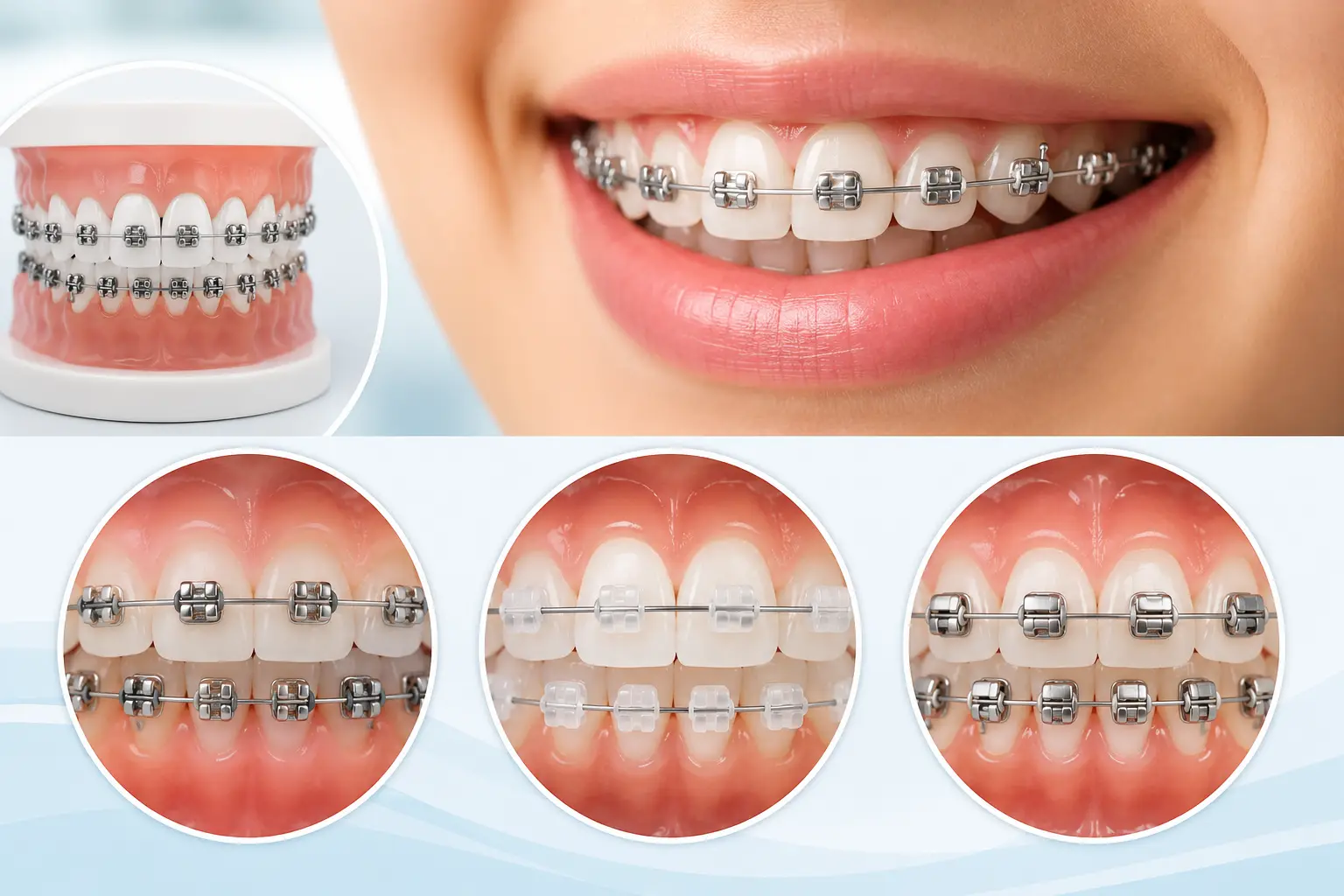
Crooked teeth, gaps between teeth, crowding, and an uneven bite can affect how your teeth fit together and how easily you can clean them. If you have been considering orthodontic treatment, dental braces may help move your teeth into better positions and improve the way your upper and lower teeth meet.
Braces use brackets and wires to apply controlled forces that gradually move teeth over time. They can be used to address many orthodontic problems, including crowded teeth, spacing, and certain bite irregularities.
At Dr. Gourav Dental Art in Karnal, Haryana, patients can consult Dr. Mrinal Singh, Consultant Orthodontist (BDS, MDS in Orthodontics and Dentofacial Orthopedics), to discuss their concerns and explore suitable orthodontic treatment options.
The right type of braces depends on your tooth positions, bite, oral health, treatment goals, and preferences. Conventional metal braces, ceramic braces, and self-ligating braces offer different features, but no single system is the best choice for every patient.
Understanding how braces work, what treatment involves, and how to care for your teeth during orthodontic treatment can help you make an informed decision.
Dental braces are orthodontic appliances used to correct the position of teeth and improve their alignment.
Traditional fixed braces consist of brackets attached to the teeth and an archwire that connects them. The wire and brackets work together to apply controlled forces, allowing teeth to move gradually into planned positions.
Depending on the treatment plan, additional components such as elastic bands or other orthodontic appliances may be used.
Braces can help address several orthodontic concerns, including:
The exact treatment depends on the cause and severity of the problem.
Braces are not only used to change the appearance of a smile. Correcting tooth alignment and the bite may also make some areas easier to clean and improve how the teeth meet during everyday activities.
However, braces do not guarantee that every dental or jaw problem can be corrected. A proper orthodontic examination is necessary to determine the most appropriate approach.
Different braces systems are available to suit different treatment needs and preferences.
At Dr. Gourav Dental Art, the listed fixed-braces options include conventional metal braces, ceramic braces, and self-ligating systems in metal and ceramic.
Your orthodontist can explain which options are appropriate for your case.
Metal braces are a widely used option for correcting crooked teeth, crowding, spacing, and many bite problems.
They consist of small metal brackets attached to the teeth and a wire that guides tooth movement. Elastic ties are commonly used to hold the wire in place, depending on the system.
Potential advantages of metal braces include:
Metal braces are visible when you smile or speak. They also require careful brushing around the brackets and wires.
If you are looking for a practical option and are comfortable with the appearance of traditional braces, metal braces may be worth discussing with your orthodontist.
Ceramic braces work on the same general principle as conventional braces, but their brackets are made from tooth-coloured or ceramic material.
Because the brackets blend more closely with natural teeth, ceramic braces may be less noticeable than traditional metal brackets.
They are often considered by teenagers and adults who want fixed orthodontic treatment with a more discreet appearance.
Potential advantages of ceramic braces include:
Ceramic brackets can be more fragile than metal brackets in certain circumstances and may require particular care. The overall appearance also depends on the wire, ties, and the individual appliance.
Your orthodontist will assess whether ceramic braces are appropriate for your treatment needs and explain any precautions.
Self-ligating braces use a built-in clip or door to hold the archwire in the bracket rather than relying on the conventional elastic ties used with many traditional braces.
They are available in different designs, including metal and ceramic systems.
Potential advantages include:
Self-ligating braces are not automatically faster, more comfortable, or more effective than conventional braces in every case. Treatment duration and appointment frequency depend on the individual orthodontic problem and the clinical plan.
Your orthodontist can explain the practical differences and help you compare the options without assuming that a newer system is necessarily the best choice.
Choosing braces involves considering more than appearance or the initial price.
The following comparison explains some important differences.
| Feature | Conventional Metal Braces | Ceramic Braces | Self-Ligating Braces |
|---|---|---|---|
| Appearance | More visible | Tooth-coloured brackets are less noticeable | Available in metal and ceramic designs |
| Bracket material | Metal | Ceramic or tooth-coloured material | Metal or ceramic, depending on the system |
| How the wire is secured | Commonly with elastic ties | Depends on the bracket design | Built-in clip or door |
| Treatment range | Suitable for many orthodontic problems | Suitable for many cases, depending on clinical requirements | Suitable for selected cases according to the system and treatment plan |
| Daily cleaning | Requires careful cleaning around brackets and wires | Requires careful cleaning around brackets and wires | Requires careful cleaning around brackets and wires |
| Main consideration | Visibility | Appearance and bracket-care requirements | Design differences and individual suitability |
No type of braces is ideal for everyone.
The best choice depends on your orthodontic needs, oral health, preferences, and budget. Your orthodontist should explain the options that are clinically appropriate for your case.
Orthodontic treatment may be considered when teeth are crowded, spaced, crooked, or positioned in a way that affects the bite.
You may benefit from an orthodontic assessment if:
These signs do not automatically mean that braces are necessary.
An orthodontist examines the teeth, gums, bite, and relevant jaw relationships before deciding whether treatment would be beneficial.
Some concerns may require orthodontic treatment alone, while others may need coordination with general dental care or other specialists.
Braces apply controlled forces that stimulate changes in the tissues supporting the teeth.
As treatment progresses, teeth gradually move towards the positions planned by the orthodontist.
The process involves more than simply making teeth look straight. The orthodontist must consider the relationship between the upper and lower teeth, the available space, the supporting tissues, and the stability of the final result.
Crowding occurs when teeth overlap or there is insufficient space for them to align properly.
Treatment planning involves determining how the teeth can be aligned while maintaining appropriate bite relationships and protecting oral health.
Depending on the case, the orthodontist may use different strategies to manage the available space.
Braces can move teeth closer together when spaces need to be reduced or closed.
The cause of the gaps matters. Spacing may be related to tooth size, missing teeth, habits, or other dental factors.
The orthodontist will assess the reason for the spacing before deciding how to treat it.
The bite describes how the upper and lower teeth meet when the mouth closes.
Braces can help correct many bite problems involving tooth position. Some cases also involve differences in jaw growth or structure and may require additional orthodontic approaches.
The appropriate plan depends on the individual diagnosis.
Orthodontic treatment is not limited to teenagers. Children and adults may both benefit from an orthodontic assessment, although the timing and treatment options differ.
An orthodontic assessment during childhood can help identify developing problems with tooth position, jaw growth, or bite.
Some children benefit from early or interceptive treatment, while others only need monitoring until more permanent teeth have erupted.
An early assessment does not mean that every child needs braces immediately.
The orthodontist will consider the child's dental development and explain whether treatment is needed now, later, or not at all.
Teenage years are a common time for comprehensive orthodontic treatment because many permanent teeth have erupted.
Treatment can address crowding, spacing, and bite irregularities, depending on the individual case.
The teenager's oral hygiene, dental development, and ability to attend appointments are important considerations.
Parents and teenagers should understand that maintaining clean teeth and following orthodontic instructions are essential throughout treatment.
Adults can also receive braces if their teeth and supporting tissues are suitable for orthodontic treatment.
Some adults seek treatment because they never had braces earlier in life. Others notice that their teeth have shifted over time or want to improve a longstanding bite problem.
Before starting treatment, the orthodontist assesses gum health, bone support, existing restorations, and other relevant dental conditions.
Adult orthodontic treatment may require additional planning, particularly when gum disease, missing teeth, or previous dental work is involved.
Understanding the treatment process can help you know what to expect before starting braces.
The exact sequence depends on the case, but most fixed-braces treatments involve the following stages.
The first appointment involves discussing your concerns, examining your teeth, and assessing how your bite fits together.
The orthodontist reviews your dental history and asks about relevant oral health concerns.
This appointment helps establish whether orthodontic treatment is appropriate and what further records may be needed.
You can also discuss the appearance of different braces systems, treatment expectations, and questions about the process.
Depending on your case, diagnostic records may include dental X-rays, photographs, digital scans, or impressions.
These records help the orthodontist evaluate tooth positions, the bite, and relevant jaw relationships.
The information is used to develop an individual treatment plan rather than relying only on how the teeth appear from the front.
The orthodontist explains the proposed treatment, the type of appliance, the expected stages, and the factors that may affect duration.
The plan may include how crowding or spacing will be managed and whether other dental treatment is required before braces are fitted.
You should understand the expected costs, appointment schedule, maintenance requirements, and possible limitations before agreeing to treatment.
During the fitting appointment, the brackets are attached to the teeth and the archwire is placed according to the selected system.
The orthodontist checks the appliance and explains how to look after it.
Fitting braces is not usually painful, although some pressure or discomfort may develop afterwards as the teeth begin to respond to the treatment.
Your orthodontist will also explain what to do if a bracket or wire becomes loose or causes irritation.
Throughout treatment, you will attend follow-up appointments so the orthodontist can assess progress and make adjustments as needed.
The schedule depends on the appliance, treatment stage, and individual clinical requirements.
These visits help monitor tooth movement, bite changes, oral hygiene, and the condition of the braces.
Attending appointments as recommended helps the orthodontist manage treatment appropriately.
Once the planned tooth movements and bite goals have been achieved, the orthodontist determines when the braces can be removed.
The brackets are taken off, and the teeth are cleaned as appropriate.
The orthodontist checks the result and explains the next stage of treatment.
Braces removal does not mean that the teeth will automatically remain in their new positions. Retention is an important part of orthodontic care.
After braces treatment, retainers are used to help maintain the corrected tooth positions.
Your orthodontist will explain which retainer is suitable, how to wear it, and how to look after it.
Follow-up appointments may be recommended to assess the stability of the result and check the retainer.
Long-term retention is important because teeth can shift after active orthodontic treatment.
The duration of braces treatment varies from one patient to another.
Some cases involve relatively straightforward tooth movements, while others require more complex correction of crowding, spacing, or the bite.
Factors that influence treatment duration include:
It is not possible to give an accurate treatment duration without assessing the individual case.
During your consultation, ask for an estimated timeline and an explanation of the factors that could affect it.
Remember that treatment should be planned around appropriate clinical outcomes rather than a promise to finish by a particular date regardless of the circumstances.
It is common to feel concerned about discomfort before getting braces.
The fitting procedure itself is not usually painful, but teeth may feel sore or tender during the first few days after braces are placed.
Similar temporary discomfort can occur after some adjustment appointments.
You may also experience irritation where the brackets or wires come into contact with the inside of your cheeks or lips.
Your orthodontist can explain how to manage these symptoms and whether a suitable orthodontic wax or other measure may help with irritation.
If you experience severe or persistent pain, significant swelling, or a wire or bracket causing an injury, contact the clinic for advice.
Do not attempt to make major adjustments to the appliance yourself.
The cost of braces treatment in Karnal depends on the type of appliance, the complexity of the orthodontic problem, and the treatment plan.
Metal, ceramic, and self-ligating braces can have different costs because they use different materials and bracket systems.
The final estimate should be based on the clinical examination and the treatment required.
Conventional metal braces, ceramic braces, and self-ligating systems may have different prices.
Straightening mildly crowded teeth can involve a different treatment plan from correcting a complex bite problem.
The amount of tooth movement and the number of monitoring appointments can influence the overall treatment arrangements.
Some patients need treatment for decay, gum problems, or other oral health concerns before orthodontic treatment begins.
Retention is an important part of orthodontic treatment. Ask whether retainers, follow-up appointments, and any additional services are included in the quoted cost.
Before beginning treatment, ask for a written plan explaining:
For information about the clinic's local braces treatment offering and pricing, see the dedicated Braces Treatment in Karnal page.
A consultation allows the orthodontist to explain the options that are appropriate for your case and provide a treatment estimate based on the assessment.
Oral hygiene becomes particularly important when you wear fixed braces because food particles and plaque can collect around brackets and wires.
Careful cleaning helps protect your teeth and gums throughout treatment.
Brush twice daily with fluoride toothpaste and a suitable toothbrush.
Pay attention to the areas above and below each bracket, the gumline, and the surfaces around the wires.
Your orthodontist or dental team can demonstrate the cleaning technique best suited to your appliance.
Food and plaque can accumulate between teeth and around orthodontic components.
Use suitable interdental cleaning aids as recommended by your dental team.
Do not force cleaning tools into tight spaces where they may damage the gums or appliance.
Hard, sticky, and chewy foods can damage brackets or wires.
Your orthodontist will explain which foods to avoid and how to reduce the risk of appliance damage.
Cutting suitable foods into smaller pieces may make eating more manageable.
Frequent exposure to sugary foods and drinks increases the risk of tooth decay.
Try to maintain regular meals, drink water, and follow your dentist's advice about diet and oral hygiene.
Regular appointments help monitor the movement of your teeth and identify oral health problems.
If a bracket becomes loose or a wire breaks, contact the clinic for advice instead of waiting until the next scheduled appointment if the problem needs attention.
If you play contact sports, ask your orthodontist about a suitable mouthguard that accommodates your braces.
Protective equipment can help reduce the risk of injury to the teeth, lips, and cheeks.
After active orthodontic treatment, the teeth need continued support while the surrounding tissues adapt to their new positions.
This is where retainers become important.
Teeth can naturally shift after braces are removed. Without appropriate retention, some of the correction may be lost over time.
Retainers help maintain the tooth positions achieved during treatment.
Your orthodontist may recommend a removable retainer or a fixed retainer, depending on the case.
A removable retainer is taken out for cleaning and other activities according to the instructions provided.
A fixed retainer is attached behind selected teeth and requires careful cleaning around the wire.
Each type has its own advantages and maintenance requirements.
The recommended wearing schedule depends on the type of retainer and the individual treatment plan.
Many patients need long-term retention to help maintain their results.
Follow the orthodontist's instructions and contact the clinic if your retainer becomes damaged, loose, or difficult to wear.
Braces and clear aligners are both used to straighten teeth, but they work differently.
Braces are fixed to the teeth, while clear aligners are removable trays that must be worn according to the prescribed schedule.
The right option depends on the type and complexity of the orthodontic problem, the patient's preferences, and the ability to follow the treatment plan.
| Feature | Fixed Braces | Clear Aligners |
|---|---|---|
| Appearance | Metal braces are visible; ceramic braces are less noticeable | Usually less noticeable |
| Removable | No, except when removed by the orthodontist | Yes, for eating, cleaning, and according to instructions |
| Daily responsibility | Requires careful cleaning and following appliance-care instructions | Requires consistent wear and safe storage |
| Treatment suitability | Can address a broad range of orthodontic problems | Suitable for many cases, with limitations depending on complexity |
| Eating | Some foods should be avoided to protect the appliance | Removed for meals and drinks other than water, according to instructions |
| Oral hygiene | Requires careful cleaning around brackets and wires | Allows brushing and flossing without the trays in place |
Neither treatment is automatically better for every patient.
A consultation helps determine which approach is appropriate and what the expected treatment process will involve.
Orthodontic treatment can improve tooth alignment and the bite, but it also requires careful planning and maintenance.
Possible concerns include:
The likelihood and significance of these issues vary from patient to patient.
Your orthodontist should explain the relevant risks before treatment and provide instructions for protecting your teeth and gums.
Good oral hygiene, regular monitoring, and following the prescribed treatment plan are important throughout orthodontic care.
Braces can help correct many bite problems involving tooth position, but the appropriate treatment depends on the underlying cause.
An overbite describes the vertical overlap of the upper front teeth over the lower front teeth.
The orthodontist assesses the amount of overlap and how the teeth meet before recommending treatment.
An underbite occurs when the lower front teeth sit ahead of the upper front teeth.
The problem may involve tooth position, jaw relationships, or both. Treatment depends on the patient's age, the severity of the discrepancy, and the clinical findings.
A crossbite occurs when some upper teeth bite inside or outside their expected relationship with the lower teeth.
An orthodontic assessment helps determine the cause and the appropriate correction.
An open bite occurs when certain upper and lower teeth do not meet when the mouth closes.
The cause may involve tooth position, jaw development, or oral habits.
Not every bite problem can be treated with braces alone. Some cases require additional appliances or a different treatment approach.
The orthodontist will explain the options based on the diagnosis.
Choosing an orthodontic clinic involves more than comparing the appearance or cost of different braces systems.
You should understand who will plan your treatment, how your progress will be monitored, and what will be required to maintain your results.
At Dr. Gourav Dental Art, patients can consult Dr. Mrinal Singh, Consultant Orthodontist (BDS, MDS in Orthodontics and Dentofacial Orthopedics), to discuss braces and other suitable orthodontic options.
When evaluating your treatment plan, consider the following:
These considerations help you evaluate the treatment process and understand what to expect before beginning orthodontic care.
If you are considering braces for crooked teeth, gaps, crowding, or an uneven bite, an orthodontic consultation is a useful first step.
The orthodontist can examine your teeth, review relevant diagnostic records, discuss your concerns, and explain which treatment options may be suitable.
You can also ask about the differences between metal, ceramic, and self-ligating braces, the expected treatment duration, oral hygiene requirements, and the estimated cost.
Contact the clinic to confirm appointment availability and discuss your orthodontic concerns.
A treatment recommendation should be based on your individual dental condition, with a clear explanation of the options, expected stages, and ongoing care required.
The cost of braces treatment in Karnal depends on the type of braces, the complexity of the orthodontic problem, the expected treatment duration, and the services included in the treatment plan. Metal, ceramic, and self-ligating braces may have different costs. A consultation allows the orthodontist to examine your teeth and bite, discuss suitable options, and provide a written estimate. Ask whether retainers, follow-up appointments, and additional treatment are included in the quoted price.
Conventional metal braces, ceramic braces, and self-ligating braces can all be used to correct many orthodontic problems. The best option depends on the severity of crowding, bite relationships, oral health, appearance preferences, and budget. Ceramic braces may be less noticeable, while metal braces are a widely used fixed option. Self-ligating braces use a different bracket mechanism. An orthodontic examination is necessary to determine which system is suitable for your case.
Braces treatment can take several months to a few years, depending on the complexity of the case. Factors include the amount of crowding, the type of bite correction required, tooth movement, oral health, and attendance at recommended appointments. Additional dental treatment may also affect the timeline. Your orthodontist will provide an estimated duration after assessing your teeth and bite. Treatment should be monitored carefully rather than rushed to meet a predetermined deadline.
Fitting braces is not usually painful, but you may experience pressure or tenderness during the first few days after placement. Similar temporary discomfort may occur after some adjustment appointments. Brackets and wires can also irritate the cheeks or lips while you become accustomed to the appliance. Your orthodontist can explain appropriate ways to manage discomfort and irritation. Contact the clinic if you experience severe or persistent pain or if a loose wire or bracket is causing an injury.
Yes. Adults can receive orthodontic treatment if their teeth and supporting tissues are suitable. Braces may help address crowding, spacing, and certain bite problems in adulthood. Before treatment, the orthodontist assesses gum health, bone support, existing restorations, and other relevant conditions. Adult treatment may require additional planning when gum disease, missing teeth, or previous dental work is involved. An individual consultation helps establish whether braces or another orthodontic option is appropriate.
Ceramic braces use tooth-coloured brackets that are less noticeable than conventional metal brackets. Both systems can correct many orthodontic problems, but their suitability depends on the case. Ceramic brackets may require particular care because of their material properties, while metal braces are a widely used and versatile option. Neither system is automatically better for everyone. Your orthodontist can explain the differences in appearance, maintenance, cost, and clinical suitability before you choose.
Self-ligating braces use a built-in clip or door to secure the archwire instead of relying on the conventional elastic ties used with many traditional braces. They are available in different designs, including metal and ceramic systems. Their mechanism differs from conventional brackets, but this does not mean they are always faster or more effective. Treatment duration and appointment frequency depend on the orthodontic problem and treatment plan. Your orthodontist can explain whether this system is suitable for you.
Yes. Braces can move teeth to reduce or close gaps when orthodontic treatment is appropriate. However, the cause of the spacing matters. Gaps may be related to tooth size, missing teeth, oral habits, or other dental factors. The orthodontist assesses the teeth and bite before deciding how to manage the space. Depending on the cause and severity, braces, clear aligners, or another treatment approach may be recommended. Retention is important after treatment to help maintain the correction.
Retainers are generally an important part of orthodontic treatment because teeth can shift after braces are removed. Your orthodontist may recommend a removable or fixed retainer, depending on the case. The appropriate wearing schedule varies, and long-term retention is often necessary to maintain the result. Follow the instructions provided by your orthodontist and attend recommended follow-up appointments. If your retainer becomes loose, damaged, or difficult to wear, contact the clinic for advice.
You can contact Dr. Gourav Dental Art at Building No. 7, opposite Archna Hospital, Duggal Colony, Dyal Singh Colony, Karnal, Haryana 132001. The clinic lists +91 86195 19149 for Dr. Mrinal Singh, Consultant Orthodontist, and +91 96716 00470 as an additional contact number. During a consultation, you can discuss crooked teeth, crowding, gaps, bite problems, and suitable braces options. Confirm appointment availability directly with the clinic before visiting.
Braces can help correct many problems involving crooked teeth, crowding, spacing, and bite alignment. However, the right treatment depends on the condition of your teeth, your oral health, and the type of correction required.
Understanding the differences between metal, ceramic, and self-ligating braces can help you prepare for an informed discussion with your orthodontist.
If you are considering braces treatment in Karnal, contact Dr. Gourav Dental Art to arrange an orthodontic consultation and discuss your treatment options, expected duration, costs, and aftercare.
The goal is to choose a treatment plan that is appropriate for your individual needs and supports a healthy, well-aligned smile.

