For appointments: +91 96716 00470 | +91 86195 19149
Monday - Saturday: 9:00am - 8:00pm
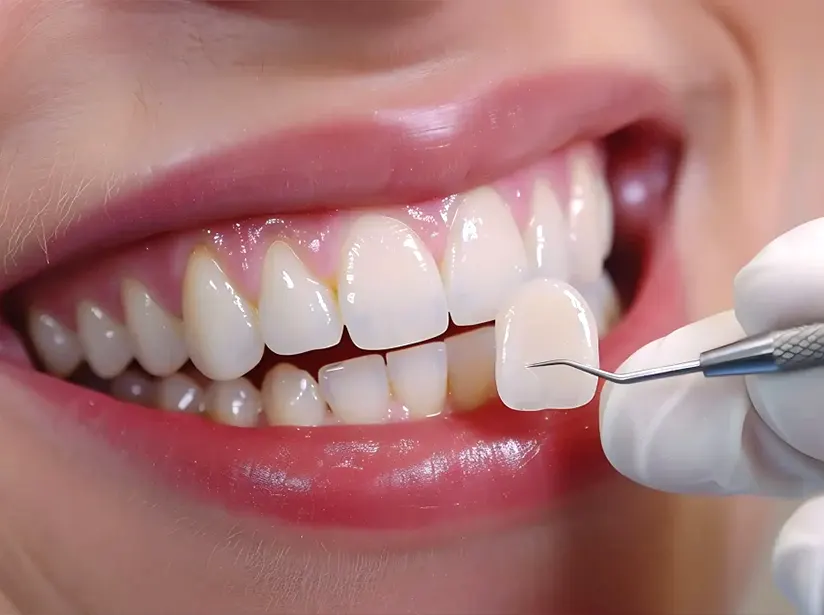
Your smile is part of how you express yourself every day. If you have chipped teeth, persistent discolouration, small gaps, or uneven edges, you may be exploring ways to improve the appearance of your teeth without undergoing extensive dental treatment.
Dental veneers are one option that may help address certain cosmetic concerns. They are thin coverings attached to the front surfaces of selected teeth to change their colour, shape, size, or appearance.
At Dr. Gourav Dental Art in Karnal, Haryana, patients can seek a dental consultation to discuss their concerns and understand whether veneers or another treatment would be suitable for their teeth.
Veneers are not simply about choosing a whiter shade. Good treatment planning considers the condition of your teeth and gums, your bite, the amount of existing tooth enamel, and the appearance you want to achieve.
Before deciding on treatment, it is helpful to understand the different types of veneers, how they are fitted, what they cost, and how to care for them afterwards.
Dental veneers are thin, custom-made coverings bonded to the front surface of teeth. They are designed to improve the appearance of selected teeth while retaining as much healthy natural tooth structure as the treatment allows.
Depending on the material and the individual case, veneers may be used to address:
Veneers can be made from porcelain or composite resin. These materials differ in appearance, fabrication, repair options, and maintenance requirements.
Not every cosmetic concern requires a veneer. Professional cleaning, teeth whitening, tooth-coloured bonding, orthodontic treatment, or a crown may be more appropriate depending on the condition of the teeth.
A dental examination helps determine which treatment is suitable and whether the expected benefits justify altering the natural tooth structure.
The two main materials used for dental veneers are porcelain and composite resin. The choice depends on the condition of the teeth, the desired result, the amount of preparation required, and the patient's preferences.
Porcelain veneers are custom-made restorations designed to cover the visible front surfaces of selected teeth.
They are generally fabricated outside the mouth using dental laboratory techniques and then bonded to the teeth by the dentist.
Porcelain can provide a natural-looking appearance because its optical properties can resemble those of natural enamel. It is also generally more resistant to surface staining than composite resin.
Porcelain veneers may be considered for selected cases involving discolouration, minor shape irregularities, small gaps, or chipped front teeth.
Potential advantages of porcelain veneers include:
However, porcelain veneers are not suitable for every patient. Depending on the case, some enamel preparation may be required, and this can make the treatment irreversible.
Porcelain can also chip or fracture, and a damaged veneer may require professional repair or replacement.
Your dentist should explain the preparation required, the expected maintenance, and the alternatives before you decide.
Composite veneers use tooth-coloured resin material to improve the appearance of selected teeth.
In many cases, the dentist applies and shapes the material directly on the tooth before hardening and polishing it. Some composite restorations may be fabricated using a different technique, depending on the treatment plan.
Composite veneers may be considered for certain chips, minor shape irregularities, and small gaps.
Potential advantages of composite veneers include:
Composite material is generally more susceptible to staining and wear than porcelain. Its surface may also need polishing or maintenance over time.
Composite veneers are not automatically reversible or free of tooth preparation. The amount of enamel alteration depends on the individual case and the technique used.
Your dentist can explain whether direct composite bonding, a composite veneer, or another treatment would be most appropriate.
Choosing between porcelain and composite veneers involves more than comparing their appearance.
The materials have different properties, and the right option depends on the condition of your teeth and your treatment goals.
| Feature | Porcelain Veneers | Composite Veneers |
|---|---|---|
| Material | Dental porcelain or ceramic | Tooth-coloured composite resin |
| Fabrication | Usually custom-made outside the mouth | Often shaped directly on the tooth |
| Appointments | Usually involves multiple stages, depending on the case | May be completed in one visit in suitable cases |
| Surface staining | Generally more resistant to staining | Generally more susceptible to staining |
| Repair | Repair options depend on the type and extent of damage | Often easier to repair or reshape |
| Tooth preparation | May require enamel removal | May require little preparation in some cases |
| Maintenance | Requires regular oral hygiene and dental reviews | May require polishing or repair over time |
| Suitability | Depends on tooth condition, bite, and treatment goals | Depends on tooth condition, bite, and treatment goals |
Neither material is the best choice for every patient.
Ask your dentist to explain the advantages, limitations, likely maintenance, and expected total cost of each suitable option before making a decision.
Veneers may be considered for adults who want to address particular cosmetic concerns and have teeth and gums suitable for the proposed treatment.
They may be an option for people with:
However, suitability depends on the underlying cause of the concern and the condition of the teeth.
Before recommending veneers, a dentist should assess the following factors.
Veneers generally rely on appropriate bonding to the tooth surface. The amount and condition of the remaining enamel can affect the treatment plan and expected outcome.
If a tooth has extensive decay, significant structural damage, or a large existing restoration, another restorative treatment may be more appropriate.
Healthy gums are important for dental treatment and long-term oral health.
If gum disease or inflammation is present, it should be assessed and appropriately managed before elective cosmetic treatment proceeds.
The way your upper and lower teeth meet can influence whether veneers are suitable.
Significant crowding, certain bite problems, or heavy forces on the front teeth may make veneer treatment less appropriate or require additional planning.
Repeated grinding or clenching can place extra pressure on veneers and increase the risk of chipping, fracture, or debonding.
Tell your dentist if you grind your teeth, clench your jaw, or experience jaw discomfort. They can assess the implications for treatment and discuss suitable protective measures where appropriate.
The condition and development of the permanent teeth should be considered before cosmetic treatment.
For younger patients, preserving healthy enamel is particularly important. Veneers should only be considered following an individual clinical assessment, with careful attention to tooth development, oral health, and less invasive alternatives.
A consultation is the appropriate starting point for determining whether veneers are suitable for your circumstances.
Veneers can improve selected cosmetic concerns, but they do not treat every underlying dental problem.
Some types of tooth discolouration may respond well to whitening, while others may require a different approach.
If whitening is unlikely to achieve the desired result, veneers may be considered in selected cases after the cause of the discolouration has been assessed.
The dentist should explain whether the proposed material can achieve a suitable appearance and whether a less invasive option is available.
Small chips affecting the front surface or edge of a tooth may sometimes be treated with composite bonding or a veneer.
The appropriate option depends on the size and location of the chip, the remaining tooth structure, and the forces acting on the tooth.
A more extensively damaged tooth may require a different type of restoration.
Veneers can sometimes change the apparent width of teeth to close small gaps.
However, the dentist must consider the proportions of the teeth and the space involved. Simply making teeth wider may produce an unnatural appearance if the gap is too large for that approach.
Orthodontic treatment may be more suitable when tooth movement is needed or when the gaps are associated with alignment problems.
A veneer may help improve the visible shape or proportions of selected teeth.
Treatment planning should consider the surrounding teeth, the gumline, and the overall appearance of the smile so that the restoration fits naturally.
Some minor irregularities in tooth shape or position can be improved cosmetically with veneers.
Veneers do not physically move teeth into new positions. If a concern involves substantial crowding, rotation, or bite problems, orthodontic treatment may offer a more appropriate solution.
The veneer procedure depends on the material selected and the condition of your teeth.
Porcelain veneers generally involve a different fabrication process from direct composite veneers, but both approaches begin with an assessment and treatment plan.
The first appointment involves discussing your concerns, expectations, and preferred outcome.
The dentist examines your teeth and gums, evaluates your bite, and checks for issues such as decay, existing restorations, and signs of grinding.
Photographs, dental scans, impressions, or X-rays may be recommended when clinically appropriate.
The purpose is to determine whether veneers are suitable and identify any dental problems that should be addressed first.
If veneers are appropriate, the dentist discusses the proposed shape, size, colour, and number of teeth to be treated.
Shade selection should consider the surrounding teeth and the desired appearance. Choosing the lightest possible shade is not necessarily the best option for every smile.
The treatment plan should also explain how much tooth preparation may be needed and what alternatives are available.
Where appropriate, a preview or mock-up may help communicate the proposed shape before treatment proceeds.
Depending on the treatment, the dentist may need to remove a small amount of enamel from the front surface of the tooth to create space for the veneer.
The amount of preparation varies from case to case.
Some treatments can be performed with little or no preparation, but this is not possible or appropriate for every patient.
Because enamel removal can be irreversible, it is important to understand the proposed changes before agreeing to treatment.
For laboratory-made veneers, the dentist records the shape of the prepared teeth using an impression or digital scan.
These records help the dental laboratory fabricate restorations that fit the planned tooth surfaces.
The dentist may discuss temporary restorations if they are appropriate for the case.
Direct composite veneers can often be shaped on the teeth without the same laboratory fabrication process.
Porcelain veneers are custom-made according to the treatment plan and laboratory records.
For direct composite treatment, the dentist applies the resin material, shapes it to the desired contour, and hardens it using a curing light.
Both approaches require careful attention to fit, contour, colour, and the relationship between the treated teeth.
For porcelain veneers, the dentist checks the fit and appearance before bonding the restorations to the teeth.
The tooth surfaces and veneers are prepared according to the bonding system being used.
After bonding, the dentist checks the bite and makes any necessary adjustments.
For composite veneers, the dentist shapes and polishes the material to achieve the planned appearance and function.
You should tell the dentist if your bite feels uncomfortable or uneven after treatment.
After treatment, the dentist explains how to care for the veneers and when to return for a review.
Regular check-ups help identify issues such as damage, wear, gum inflammation, or changes in the bite.
Following the recommended maintenance plan is important for protecting both the veneers and the natural teeth beneath them.
The time required depends on the type of veneer, the number of teeth involved, and whether other dental treatment is necessary.
Direct composite veneers may be completed in one appointment in suitable cases.
Porcelain veneers generally involve consultation and planning, tooth preparation where required, fabrication, and a separate appointment for fitting and bonding.
The process may take longer if gum disease, decay, or another oral health problem needs to be addressed first.
Before treatment, ask your dentist how many appointments are expected, whether temporary restorations will be required, and when the final veneers are likely to be fitted.
A realistic timeline should reflect your clinical needs rather than a standard promise that applies to every patient.
The level of discomfort depends on the procedure and the amount of tooth preparation required.
Some patients experience little discomfort, while others may notice temporary tooth sensitivity after treatment.
If enamel preparation is needed, your dentist will explain the procedure and discuss appropriate ways to manage discomfort.
After the veneers are fitted, it may take a short period to become accustomed to their feel. However, persistent discomfort or a bite that feels uneven should not be ignored.
Contact your dentist if you experience continuing sensitivity, pain when biting, or any other symptoms that concern you.
Dental veneer costs vary according to the type of material, number of teeth being treated, laboratory requirements, and the complexity of the case.
There is no single price that applies to every patient.
A consultation helps determine which treatment is appropriate and allows the clinic to prepare an estimate based on the proposed procedure.
Porcelain and composite veneers involve different materials and fabrication methods. These differences can affect the overall treatment cost.
Treating one tooth is different from treating several teeth as part of a broader smile enhancement plan.
If decay, damaged restorations, or gum problems need treatment first, the overall dental care plan may involve additional costs.
The amount of preparation, the condition of the teeth, and the difficulty of achieving an appropriate fit can influence treatment planning.
Laboratory-made porcelain veneers involve fabrication according to the clinical records and specifications. The selected material and laboratory process may affect the cost.
Ask what is included in the treatment estimate and whether review appointments, temporary restorations, or repairs are charged separately.
Before proceeding, request a written estimate that explains:
At Dr. Gourav Dental Art in Karnal, you can contact the clinic to discuss your concerns and arrange a consultation about suitable treatment options.
The cost should be explained after the dentist has assessed your teeth and established the proposed treatment plan.
Dental veneers can provide long-term cosmetic improvement, but their lifespan varies according to the material, clinical conditions, oral habits, and maintenance.
Porcelain veneers generally have good resistance to surface staining, while composite veneers may be more susceptible to wear and discolouration.
Neither type is permanent in the sense of being guaranteed to last indefinitely.
The longevity of veneers can be influenced by:
A veneer may chip, fracture, loosen, or require replacement over time.
Your dentist can explain the likely maintenance needs for your specific treatment and discuss what to do if a veneer becomes damaged.
Good oral hygiene is important after veneer treatment. Veneers cover only part of the tooth, so the underlying natural tooth and the surrounding gum tissues still need care.
Brush twice daily with fluoride toothpaste and use a soft-bristled toothbrush or another brush recommended by your dentist.
Pay attention to the gumline and the areas around the edges of the veneers.
Use dental floss or another suitable interdental cleaning aid to remove plaque from between your teeth.
Your dentist can demonstrate an appropriate technique for your restoration.
Do not use your teeth to open packaging, bite fingernails, or hold hard objects.
These habits can place unnecessary stress on veneers and natural teeth.
Avoid biting directly into very hard objects or foods that could damage the restoration.
Your dentist can advise you about any particular precautions based on the type and position of your veneers.
If you grind or clench your teeth, discuss this with your dentist.
A suitable protective appliance may be recommended in selected cases to help reduce excessive forces on the teeth and restorations.
Regular examinations allow your dentist to check the veneers, surrounding gums, and natural teeth.
Professional monitoring can help identify early signs of damage or other problems that need attention.
Dental veneers can improve the appearance of selected teeth, but they have limitations that should be understood before treatment.
Some veneer treatments require removal of a small amount of enamel.
Once natural enamel has been removed, it does not grow back. Depending on the preparation and restoration, the tooth may need ongoing restorative care.
Ask your dentist whether a less invasive option is appropriate for your case.
Porcelain and composite veneers can both become damaged.
The risk depends on factors such as bite forces, grinding, material, restoration design, and accidental injury.
A damaged veneer may require repair or replacement.
Composite resin can become discoloured or lose its surface polish over time.
Maintenance or repair may be needed to preserve its appearance.
The natural tooth beneath a veneer can still develop decay, particularly around the edges if plaque accumulates.
Daily cleaning and regular dental reviews remain important.
If gum inflammation or periodontal disease is present, the underlying condition should be assessed and managed.
Veneers are not a substitute for treating oral health problems.
Veneers can change the appearance of selected teeth, but they do not move teeth into new positions.
Significant crowding, bite problems, or substantial misalignment may require orthodontic assessment.
A careful consultation should cover these limitations and help you decide whether veneers are an appropriate option.
Veneers and crowns are different types of dental restorations.
A veneer generally covers the front surface of a tooth, while a crown covers most or all of the visible portion of the tooth above the gumline.
The choice depends on the condition of the tooth and the amount of structural support required.
| Feature | Dental Veneers | Dental Crowns |
|---|---|---|
| Main purpose | Improve the appearance of selected tooth surfaces | Restore a tooth that requires more extensive coverage |
| Coverage | Usually the front surface | Covers most or all of the tooth's visible portion |
| Tooth preparation | Often more limited, depending on the case | Generally requires more extensive preparation |
| Common considerations | Colour, shape, minor chips, selected gaps | Extensive structural damage, selected heavily restored teeth, and other clinical indications |
| Suitability | Depends on enamel, bite, gum health, and cosmetic goals | Depends on the amount of remaining tooth structure and clinical needs |
A veneer is not automatically preferable because it may require less preparation. A crown may be more suitable when a tooth needs greater structural coverage.
Your dentist can explain which restoration best addresses the underlying problem.
Teeth whitening and dental veneers are used for different purposes.
Whitening changes the colour of natural teeth but does not change their shape or close gaps.
Veneers can change the colour and shape of selected teeth, but they may require alteration of the natural tooth surface.
If your main concern is discolouration, whitening may be worth discussing before considering a veneer.
However, not all stains respond equally to whitening. Your dentist can assess the cause of the discolouration and explain which options are suitable.
It is also important to remember that veneers do not whiten in the same way as natural teeth. The colour should therefore be planned carefully before the restorations are fitted.
Veneers and orthodontic treatments address different problems.
Veneers alter the visible surfaces of selected teeth to improve their appearance. Braces and clear aligners move teeth into different positions.
If you have substantial crowding, spacing, rotated teeth, or bite concerns, orthodontic treatment may address the underlying alignment problem rather than masking it cosmetically.
For some patients, a combination of orthodontic and restorative treatment may be considered. For others, one approach may be sufficient.
The appropriate option depends on your oral health, tooth positions, bite, and goals.
A dental consultation can help you understand whether veneers, braces, clear aligners, or another treatment is appropriate.
Choosing a dental clinic for veneer treatment involves more than comparing photographs or advertised prices.
It is important to understand the condition of your teeth, the proposed preparation, the materials being used, and the maintenance that may be required.
At Dr. Gourav Dental Art in Karnal, patients can arrange a consultation to discuss their dental concerns and explore appropriate treatment options.
When evaluating a veneer treatment plan, consider the following:
These questions can help you make an informed decision rather than choosing a treatment based only on appearance.
If you are considering veneers for chipped teeth, discolouration, small gaps, or other cosmetic concerns, a consultation is a useful first step.
The dentist can assess your oral health, discuss your expectations, and explain whether veneers are suitable for your teeth.
You can also ask about alternative treatments, the amount of preparation required, the difference between porcelain and composite materials, and the estimated cost.
Contact the clinic to confirm appointment availability and discuss your concerns.
The aim should be to choose a treatment that supports your oral health and provides a realistic, appropriate result for your individual circumstances.
Dental veneers are thin coverings bonded to the front surfaces of selected teeth to change their colour, shape, size, or appearance. They are commonly made from porcelain or composite resin. Veneers may be considered for certain types of discolouration, minor chips, small gaps, and shape irregularities. Their suitability depends on the condition of the teeth, gums, and bite. A dentist can assess whether veneers or a less invasive alternative would be appropriate for your needs.
The cost of dental veneers in Karnal depends on the material, number of teeth treated, laboratory requirements, and complexity of the case. Porcelain and composite veneers involve different fabrication methods and maintenance considerations. Additional dental treatment may also affect the total cost. Request a written estimate that explains the proposed material, number of veneers, preparation, appointments, and follow-up arrangements. A consultation is necessary to establish an appropriate treatment plan and provide an individual cost estimate.
Porcelain and composite veneers have different advantages and limitations. Porcelain generally offers good resistance to surface staining, while composite resin can often be repaired or reshaped more easily. Composite treatment may be completed in one appointment in suitable cases, whereas porcelain veneers usually involve laboratory fabrication. The best option depends on the tooth condition, bite, preparation required, appearance goals, and maintenance preferences. Your dentist can compare the options and explain which is appropriate for your circumstances.
Dental veneers are designed for long-term use, but they do not last indefinitely. Porcelain and composite veneers may chip, wear, stain, loosen, or require replacement over time. Some veneer procedures involve removing natural enamel, which does not grow back. This means treatment can have long-term consequences for the tooth. Before proceeding, ask your dentist about the preparation required, maintenance needs, possible complications, and alternatives that preserve more of your natural tooth structure.
The level of discomfort depends on the type of veneer treatment and whether tooth preparation is required. Some patients experience little discomfort, while others notice temporary sensitivity after treatment. Your dentist can explain what to expect and discuss appropriate ways to manage discomfort. After fitting, the veneers should feel comfortable when your teeth meet. Contact your dentist if you experience persistent pain, continuing sensitivity, or a bite that feels uneven rather than assuming these symptoms are part of normal adjustment.
Veneers can sometimes improve the appearance of small gaps by changing the shape and width of selected teeth. However, the dentist must assess the size of the gaps and the proportions of the teeth before recommending this approach. Making teeth wider may not be appropriate for larger spaces. Orthodontic treatment with braces or clear aligners may be a better option when the underlying problem involves tooth position. A consultation helps determine which approach can address the concern appropriately.
Dental veneers can be designed to complement the colour, shape, and proportions of the surrounding teeth. The final appearance depends on the material, shade selection, tooth preparation, restoration design, and the skill of the dental team. A natural-looking result does not necessarily mean choosing the whitest shade. Your dentist should discuss your expectations and explain what is realistic for your teeth. Where appropriate, photographs or a treatment preview can help communicate the proposed appearance before treatment begins.
Porcelain veneers are generally resistant to surface staining, while composite veneers are more susceptible to discolouration and wear. Both types can chip, fracture, or become loose under certain conditions. Teeth grinding, biting hard objects, accidental injury, and other factors can place additional stress on restorations. Good oral hygiene and regular dental reviews are important for maintenance. If a veneer becomes damaged or feels loose, contact your dentist for an assessment instead of attempting to repair it yourself.
Veneers and crowns serve different purposes. Veneers generally cover the front surface of a tooth and may be considered for selected cosmetic concerns. Crowns cover most or all of the visible portion of a tooth and may be appropriate when more extensive structural coverage is required. The best choice depends on the amount of remaining tooth structure, existing damage, bite, and treatment goals. A dentist can explain which restoration is appropriate and how much natural tooth preparation each option may require.
You can contact Dr. Gourav Dental Art at Building No. 7, opposite Archna Hospital, Duggal Colony, Dyal Singh Colony, Karnal, Haryana 132001. The clinic lists +91 96716 00470 and +91 86195 19149 as contact numbers. During a consultation, you can discuss your cosmetic concerns, learn about porcelain and composite veneers, and understand the alternatives, preparation, maintenance, and estimated cost. Confirm appointment availability directly with the clinic before visiting.
Dental veneers may be an option for improving selected cosmetic concerns, but choosing the right treatment requires more than deciding on a material or shade.
Your dentist should assess your teeth and gums, explain how much preparation is needed, and discuss alternatives before recommending a treatment plan.
If you are considering dental veneers in Karnal, contact Dr. Gourav Dental Art to arrange a consultation and discuss your concerns, suitable treatment options, and estimated costs.
An informed decision starts with understanding the benefits, limitations, and long-term care involved in every option.

